



Buying Guide

Getting invited to a wedding is the easy part — figuring out what to wear as a guest is where most men get stuck. The rules are different from what the groom wears, and getting it wrong in either direction means underdressing next to the wedding party or accidentally upstaging them. A solid pick from our wedding suits collection covers most situations, but the details below are what make it work for this specific wedding.
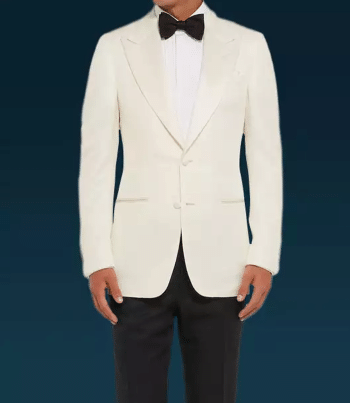
For most weddings, navy or charcoal is the safe default. Save black for evening or black-tie weddings, skip anything white, ivory, or cream, and check the invite for a dress code before assuming "wedding" automatically means dark and formal — plenty of daytime and outdoor weddings call for lighter colors and fabrics.
The invite usually tells you more than people give it credit for. "Black tie" means a tuxedo, not just a dark suit. "Cocktail" or "semi-formal" means a suit is expected, tie optional depending on the room. "Casual" or no dress code listed usually still means a suit for a wedding — guests rarely overdress by wearing one.
If the wording on your invite is unfamiliar, our dress code guide breaks down exactly what each term requires before you get dressed.

Navy and charcoal work at almost any wedding, in any season, day or night. Lighter grey and tan work well for daytime, spring, or summer weddings. Black is correct for evening and black-tie weddings, but can look funeral-adjacent at a bright daytime ceremony.
The one hard rule: skip white, ivory, and cream entirely. Those colors are reserved for the couple, and wearing them as a guest reads as a real misstep, not just a style choice. For a deeper breakdown of which shades work together, FJackets' suit color guide covers the full range.

An outdoor summer wedding calls for lighter fabric and color — a lightweight suit in tan, light grey, or navy holds up better in the heat than a heavy three-piece. A fall or winter wedding, especially indoors, can carry a darker navy or charcoal without looking out of place.
Beach or garden weddings give the most room to lighten up on both color and formality; a formal indoor evening wedding is where you want to stay closer to navy, charcoal, or black. FJackets' two-piece suits cover most of these situations without needing a separate suit for every wedding you attend.

A small number of weddings specifically request black tie, usually evening ceremonies at a formal venue. This is the one case where a dark suit isn't quite enough — a proper tuxedo is expected. If you attend enough formal weddings to justify owning one, FJackets' black tie formal collection is built for exactly this; for a one-time event, renting is a reasonable call too.
Navy is almost never wrong. It reads as put-together at nearly every wedding, regardless of season, time of day, or how strict the dress code turns out to be.
Dressing right for a wedding as a guest comes down to reading the invite, picking a color that isn't reserved for the couple, and matching the formality of the venue and time of day. Navy and charcoal get you through almost every situation — everything else is a refinement based on the specific wedding.
Yes, especially for evening or formal weddings, but it can look out of place at a bright daytime ceremony where navy or grey reads better.
White, ivory, and cream are the hard no's, since they're reserved for the couple. Beyond that, avoid anything so bright or patterned that it competes with photos.
Default to a suit. Guests rarely overdress for a wedding, and a suit works even if the event turns out to be more casual than expected.
Yes — a navy or charcoal suit is expected to be worn more than once. Changing the shirt, tie, and pocket square is enough to make it feel appropriate each time.
A lightweight suit in a lighter color like tan, light grey, or navy, paired with breathable fabric. Save heavier dark suits for fall, winter, or indoor evening weddings.

100% real leather jackets, coats & blazers. Factory-direct craftsmanship with easy returns.


